Tessella Biosciences Develops New Bioink for 3D Printing Lifelike Lung Tissues
Recently, Tessella Biosciences, a spin-off company from McMaster University in Canada, has achieved a major breakthrough by successfully developing a new type of bioink capable of 3D printing highly realistic lung tissues. This innovative achievement is expected to revolutionize medical modeling and drug testing, opening up new avenues for the research and treatment of lung diseases.
The bioink developed by the Tessella Biosciences team is a printable hydrogel material. Compared with traditional bioinks, it has significant advantages. Traditional bioinks usually require low-temperature treatment and have unstable structures, while Tessella's bioink can realize 3D printing of elastic structures at physiological temperatures.
Hirota, a member of the Firestone Institute for Respiratory Health at St. Joseph's Hospital, McMaster University, pointed out: "The lungs are organs with respiratory functions. With each breath we take, the lungs expand and contract. However, 95% to 99% of the research in laboratories is currently conducted on hard plastic petri dishes, whether ordinary petri dishes or tissue culture plates. Obviously, this hard plastic is completely different from real lung tissue." It is based on this profound understanding of the practical gap that prompted the team to develop a new type of bioink.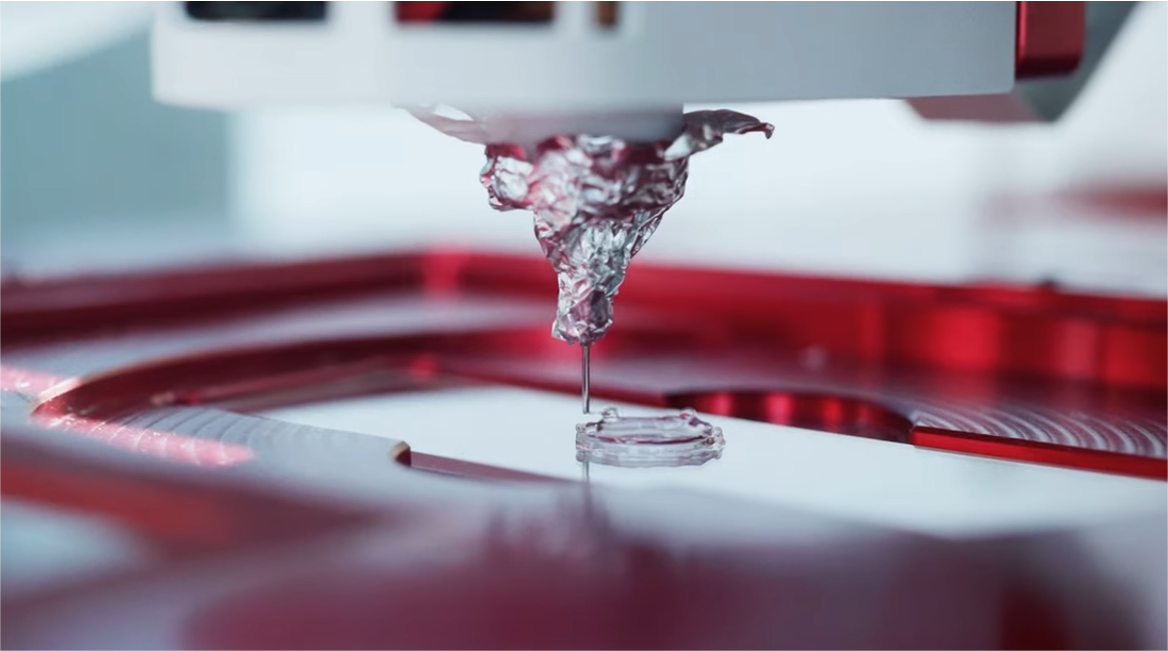
The conception of this bioink formula stems from the practical challenges in lung research. As a doctor and expert in chronic lung diseases, Hirota emphasized the difference between living respiratory lung tissue and the rigid culture conditions commonly used in laboratories. By collaborating with chemist José Moran - Mirabal and doctoral student David Gonzalez Martinez, the team developed a material system that can print stable and stretchable structures, simulating the dynamic characteristics of lung tissue.
The printed models are not only adjustable in mechanical properties but also can support cell interactions under physiologically relevant conditions. This enables more accurate drug testing and improves disease - related in vitro models. The printing time of the bioink can be controlled within one hour and is compatible with standard bioprinting systems. Its production process adopts a closed - loop mode, which can maintain a sterile environment and ensure the repeatability of experimental results.
José Moran - Mirabal said: "It's amazing to transform the achievements in the laboratory into products that can truly affect people's lives. At McMaster University, we have the right environment to transform interesting discoveries in the laboratory into new, market - valuable products, ensuring that people can benefit from our research." He further looked forward: "Although this sounds a bit like science fiction, from the perspective of tissue repair, in the future, it may be possible to replace a small part of damaged tissue with printed tissue, enabling it to self - regenerate and heal. From a more complex level of 3D printing, it may even be possible to print complete organs in the future."
In the long run, the team plans to adjust this material for application in implantable fields such as skin transplantation or tissue repair. Looking forward, this technology is also expected to support the regeneration of some tissues or gradually build more complex organs. Tessella Biosciences' new bioink has undoubtedly brought promising new hope to the biomedical field, and its subsequent development and application deserve continuous attention.